What happens when you see a sudden wide crack on the wall at home? Or, you notice that a tap is leaking? The paint peeling off, the roof plaster falling off? You rush off to get a builder to check and do the needful. Right?
But when the bigger home, our planet, cries for attention how many of us pay heed? The difference is this one belongs to all of us, and hence no one wants to take on the responsibility. We expect someone else to do the repairs. We become too busy or too engrossed with our individual little homes. Or even worse think, why should I when he/she doesn’t bother?
Soon we will be forced out of our nooks. Things are headed to a point where life will become a struggle and only the well-heeled folks can survive. Water will be highly priced and hard to find. Food will be difficult to grow under the heat conditions. Floods, droughts, heatwaves, blizzard storms, etc are here to stay. We have successfully managed to shift gears in 150 years from a warm liveable planet to a chaotic one.
We made the machines that helped ease our toil but somewhere along the road we forgot to call a halt. We added ‘comforts’ to our list and these came at the cost of a predictable and stable climate. Today we can’t let go of our cars and planes, air-conditioning and heating, energy guzzling offices and homes and so on. We did not see what was happening to our planet. The atmosphere was having a party too, gathering all the carbon dioxide and other greenhouse gases. The heat began to tell.
It dawned on us that our ways of extracting energy was wrong. Fossil fuels that once were a boon now turned a bane. But we still couldn’t let go. Because, we got used to the comforts at a cheap price.
And now they say, our planet is turning into a hothouse!
Yes. A study in One Earth says that we are on the brink of a few tipping points that will see the climate on earth irreversibly set on the path of sustained warming. Amazon forests are shrinking drastically. In May 2025 we lost an area of the forests the size of New York, double the area lost in the previous May. Parts of the Amazon have lost up to 40 percent of its biomass in eight years. The rainforests bring down the rain and the rain sustains the forest. Once the forest is gone, the rains are gone and in no time the Amazon will turn from a massive carbon sink (absorbing carbon dioxide) to a carbon source! More CO2 into the atmosphere, more warming, and so the feedback loop will see temperatures building up.
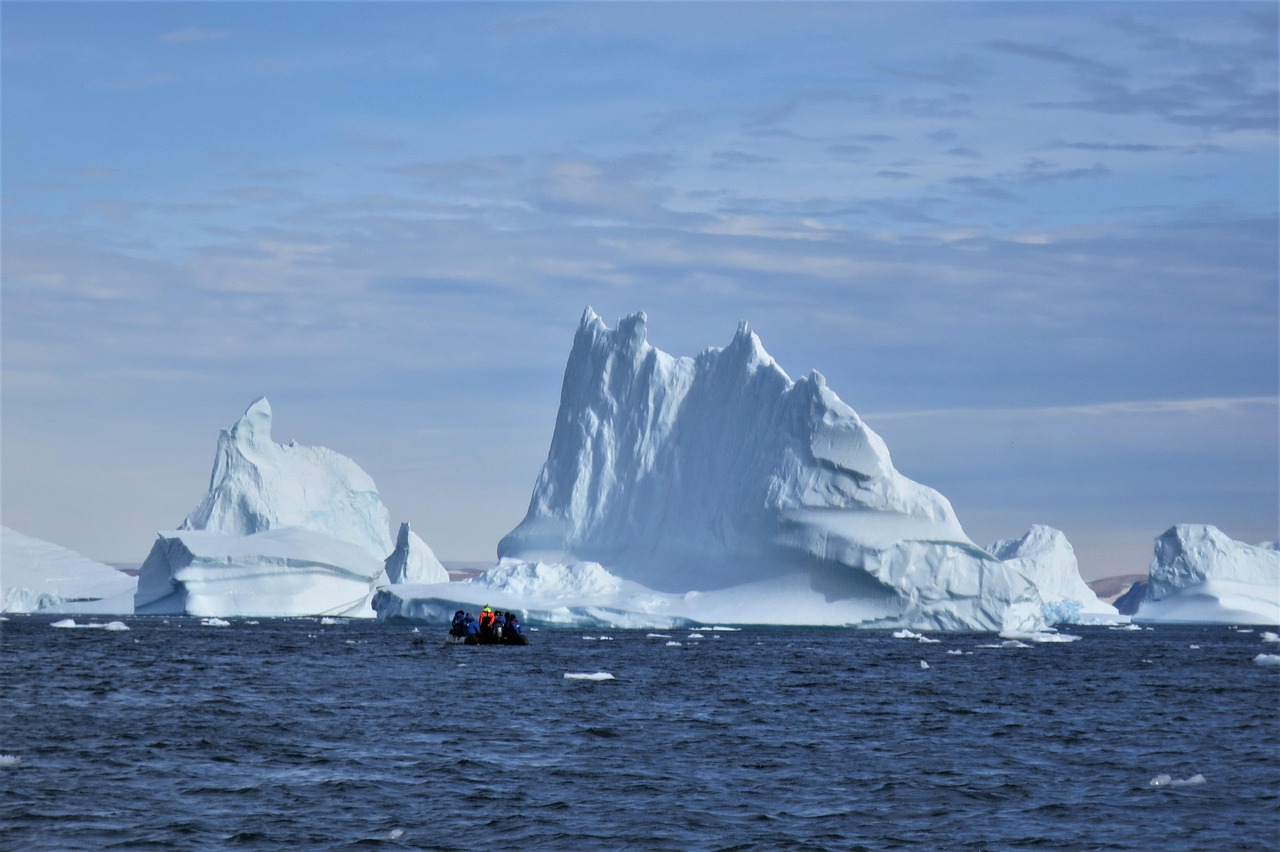
Similarly, the melting of glaciers in Greenland and Antarctica will mean more heat absorbed than reflected. As permafrost melts the methane that was tucked away is exposed and the warming picks up. There are 16 such tipping points that the scientists claim are near the threshold point after losing resilience. With every fractional rise in temperature, the risk of many of the systems crossing over increases. This makes it even more imperative to reduce emissions and limit warming.
Once many of these systems tip over, it can send temperatures rising as high as 4 degrees above pre-industrial levels.
If 4 degrees seems nothing much, let us place it in context. From pre-industrial times before 1850s to now, the average global temperature has risen by 1.5 deg C. The temperature today is the hottest that the planet has seen since almost 125,000 years. This build up has been purely due to the greenhouse effect caused by certain gases like CO2, NO, methane, water vapour, etc in the atmosphere, all thanks to our activities.
With even a 1 deg rise we have seen increasing incidences of weather extremes. Heat waves, drop in food production, shrinking glaciers and water scarcity, coastal city inundation, droughts and floods, we have begun to see all this since a decade. This will now worsen once the tipping over happens. So alongwith mitigation, we also need to strengthen adaptation measures as some impacts of climate change are now unavoidable.
What at 4 degrees?
Staple crops suffer dramatic yield declines above 35°C, the FAO had warned in 2024. We have seen how heat and drought in recent years affected harvests across the globe. Dairy and meat production also would be affected as cattle face stress. More mosquito borne diseases will spread to new regions with rising temperatures, as warned by WHO.
Almost half of all species could face extinction at 4°C rise in temperature. The loss of biodiversity will lead to spread of diseases and collapse of ecosystems. It will also affect the food webs of many species. Any rise above 3 deg C will see the global GDP dip by more than 10 percent by 2100, said a 2023 study published in Nature.
Are we doing nothing at all to prevent all that catastrophe? Yes and no, we have changed direction but not picked up the speed we should have. Beginning with the 1979 climate meet to yearly climate conferences from 2010, the nations have been meeting and having talks. In the Paris meet around 196 nations agreed in principle to act on climate according to nationally determined contributions (NDC). But, these commitments are not binding and have been far lesser than required, and hijacked by national interests and politics.
Even the calculations made to avoid a 1.5-2 deg rise were not correct claim many studies, some saying a tripling of the emission cuts alone can avert the rise in temperature. As of now the planet is headed to a 3 deg rise but if nations do not stick to the committments then it is 4 deg by 2100.
All nations have been doing much lesser than promised. There are no accurate mechanisms for monitoring and verifying the progress of NDCs. The developed nations were to do much more and at a faster pace and that has not happened. We have seen the US, one of the top contributors to the climate crisis, withdraw from the Paris accord. Financial aid of 100 billion dollars to be given to the poor nations by 2020 is still lagging.
The Paris accord did help change direction of the world at large. More nations today have renewable energy coming up. The same cannot be said though about afforestation or biodiversity loss. Still, we are not without hope.
The State of Climate report 2025 noted that solar and wind energy can supply up to 70 percent of global electricity by 2050 and that protecting existing forest, wetlands, mangroves and peatlands we still can avoid 10 gigatonnes of Co2 emissions by 2050. Reducing food loss and waste we can avoid 8-10 percent of emissions, even more by shifting to plant-rich diets.
But how do we get our political leaders to do more? Especially if we are to avoid the tipping points. Why is climate change not on the same page as nuclear war threat? Is it a lack of awareness or a refusal to change from GDP oriented growth sans environment? Some hard steps will have to be taken and that may cause some loss of votes.
A ray of hope in this regard comes from two rigorous surveys co-authored by the Potsdam Institute for Climate Impact Research and published in Nature Human Behaviour. It showed that the public in developed nations support climate policy even when it involved a substantial financial flow from their nations to the Global South. Emboldened by such studies, the leaders need to cash in on realistic perceptions of what is acceptable to the public.
All nations must act together and do what is necessary to avert the climate disaster. Not in bits and pieces but go the whole hog. There can be no winners and losers. Only any one.
By Jaya